
How To Plan for A Home Remodel
In our crazy real estate market, moving to a new home is still difficult for many families, making remodeling or adding onto one’s home an attractive option for many of us here in Austin and the surrounding area.
Homeowners have spent more of their resources on home renovations over the past few years than ever before, according to Statista. In 2019, homeowners spent $328 billion on home improvement projects. In 2023, they are estimated to spend about $485 billion.
These homeowners can reap significant financial benefits too, as even small kitchen renovations can have an 87% return on investment. That said, we always recommend that homeowners think in terms of the value and quality of life they will get from their home improvements, and compare to the costs of alternatives like moving, as much or more so than the direct ROI that will come from the remodel and/or home addition. Even small projects like brightening up a
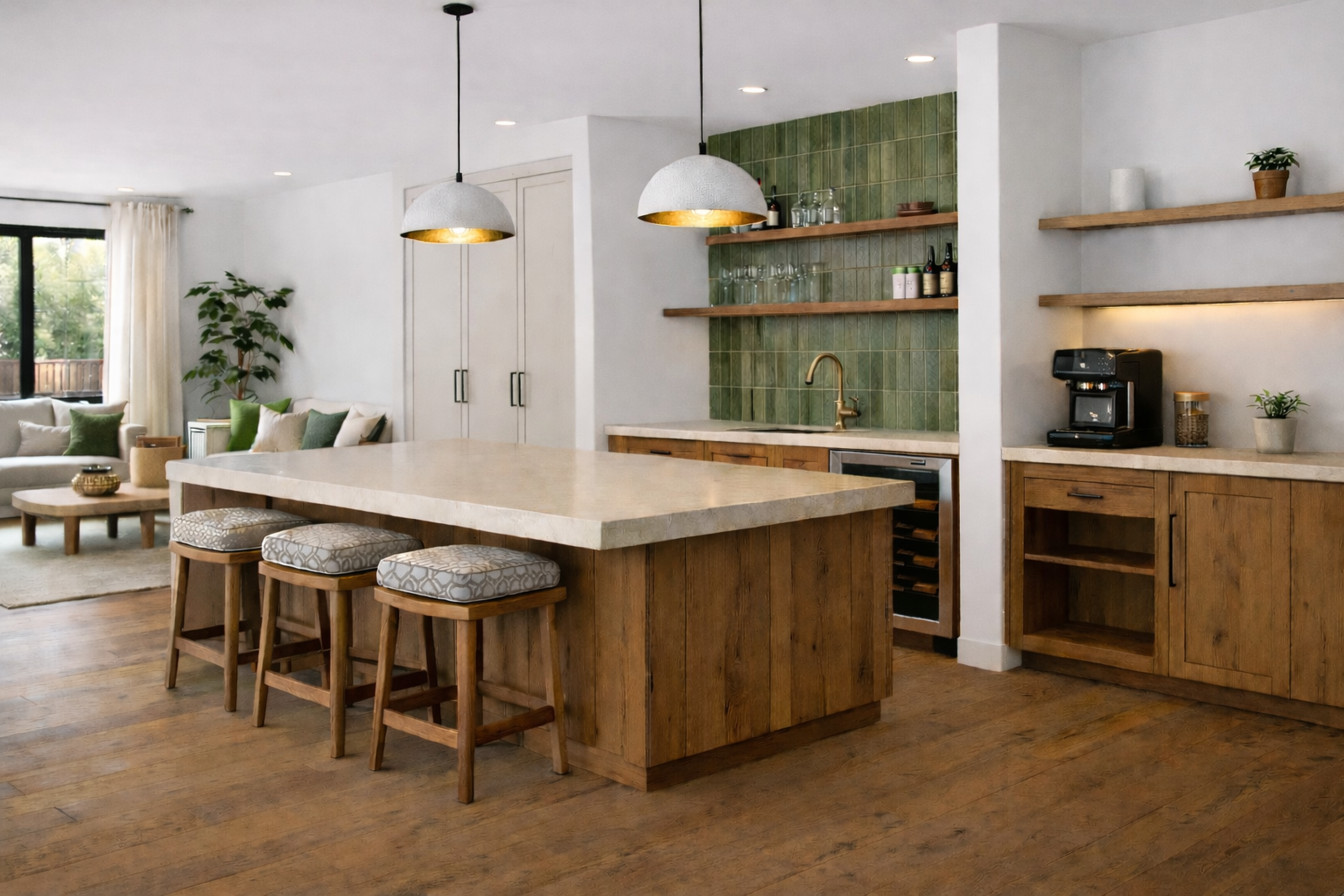
kitchen, indulging in a primary
bath remodel, adding on a nice
deck or outdoor area, or
enclosing an existing patio to add to the conditioned square footage of the home are all great options to improve the beauty, value, and functionality of the home.
So what can you do as a homeowner to plan for your next renovation?
The following tips can help make any type of remodel a success.
Outline Goals and Budget
When we first meet with people who have a new home project in mind, it is most important to know what you need, and why you want to change your home. So step one is to define or conceptualize what it is you need, and what you think it may take to get there. From there we can work with you to provide options for what can be done to the home to best meet your needs within your desired budget.
Set Priorities: Even a seemingly minor home remodel project usually takes longer and costs more than homeowners initially expect. Before hiring a contractor, homeowners should make a short list of needs and wants – focusing on outcomes rather than project specifics. A goal may be functional, such as needed office space, replacing an old roof, or creating a more open floor plan. Goals can also be purely aesthetic. A few goals we frequently hear from our clients are: “I would like my home to be more beautiful so I can enjoy it and enjoy sharing it with others," or "I would like to have more private space for reading, studying or working;" "we would like a space dedicated to family time with media and games," or "I would like my kitchen to be more usable, functional, where multiple people can cook together and where we can entertain while cooking;" "I would like to be able to see into our back yard when I walk in the home and we would like more openness and light in the common areas," or "we need a new roof and would like to add a sunroom or outdoor area along with it so we can better enjoy the outdoors” and so forth.
Where there are two homeowners involved, go through that list together and set priorities – what is most important to you and why?
Consider the Budget:
After understanding your goals, think about the resources you are willing to spend to get there, and where will they come from. Many of our clients use a blend of funds transferred from investment accounts (shifting funds from one investment into an investment in the home), take out home equity or home improvement loans, refinance, or use home improvement project financing in addition to funds from personal savings. Credit cards can be an option where points or other perks are available and the charges can be bought down quickly.
A fund should also be set aside as a contingency since home remodeling projects can lead to surprise costs and repairs that were not known or accounted for, what we in the industry refer to as “existing conditions.” In most cases these are pre-existing issues with the home that could not be recognized prior to opening walls.
Part of the budget may include necessities such as renting an apartment or staying at a hotel, depending on the length of the project. Your contractor should be able to tell you whether you can live in the home for any or all of the project. We always recommend that even if you are able to stay in the home for the duration of the project (for example with a small home addition or a remodel to the kitchen or bathroom), you should still plan to be out for a few days, especially if there will be tile or drywall demo which can be the messiest part of a project.
Design Services
Consider whether you will need design services for your project. At TRS we believe that the design phase is one of the most important parts of the project, thus most of our projects include full design services. The design process is integral to ensuring that all parties are on the same page related to the scope of work, and enable you the homeowner to “see” - on paper and in 3D computer modeling - exactly what we will build for you. This process frequently brings about minor or even major changes in direction as we work with you to think through needs, wants and priorities, and how we can best satisfy them through your home renovation. And then the icing! Using the design process to select materials, colors, tile patterns, shelving, the finishing touches, and put them all together to create the look and feel of your new or renovated spaces!
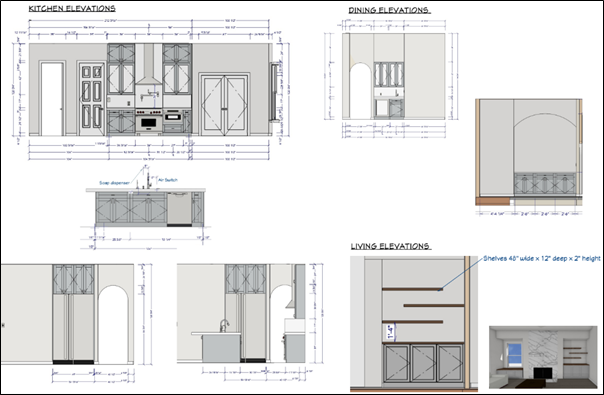
You can also consider whether you would like to select a designer separate from your builder. As a design-build firm, we usually perform all services from design through permitting through construction, and our clients find this ensures consistency and clarity of scope throughout the project. In addition, as a builder we bring into the design process downstream considerations related to how design decisions may impact time or cost of the build. That said, we also work with local architects and designers that were brought on by our clients prior to working with us. Either way, for small projects design services are a plus, and for large ones, they are usually a necessity.
In addition to supporting a common understanding of scope, and beautiful and functional end results, design services may be a requirement due to the next step in a project – Permitting and Approvals.

Other Remodel Requirements – Permits and Home Owners Associations
Another question we frequently hear early on - will my project need a permit? That depends on where you live (what city or permitting jurisdiction) as well as the scope of the project. Generally, if you live in an area that is under a city permitting jurisdiction and your project involves adding square footage, converting garage or attic square footage to conditioned (heated and cooled space), changing an existing floor plan (moving interior walls), or changing anything related to mechanical, electrical, or plumbing (MEP), then your project will trigger permitting requirements. Outside of City jurisdiction, there may still be county requirements or MUD/PUD requirements that are very similar to permitting. Depending on your location and project type, permitting will add some time and costs to the project. The good news is that your contractor can take care of the permitting requirements for you, and should have an understanding of the permitting rules in your area.
Also, if you live in an area with a Home Owners Association (HOA), they may also have requirements. Typically HOAs focus on exterior work (what the neighbors will see), and they may also have requirements around where contractors can park or where a port-o-let (porta potty) can be placed if needed during construction. We always recommend that if you are considering on doing a major project, or anything that affects the exterior of the home, give your HOA a call just to see what they expect for notifications or submittals. As well as providing full service permitting, TRS also helps clients with documentation needed for the HOA or neighborhood association.
Choose a Contractor Carefully
Contractors and their staff are essential partners in making a remodel everything you want it to be. That’s why doing research is the key to finding a reputable and experienced contractor who not only understands a vision, but respects time and money constraints. Often, your remodeling contractor can make helpful suggestions to reduce costs in unessential areas, or optional design opportunities that hadn’t been considered.
Ask friends and family if they know any contractors they’d recommend and check their websites and reviews, or check out lists of local remodeling companies that are part of reputable member organizations like the National Association of the Remodeling Industry (NARI) and the Home Builders Association (HBA), both of which maintain lists of member companies. TRS Build is a member of both of these organizations and finds them to be essential and incredibly valuable resources. Through these memberships we as a contractor have multiple opportunities to learn together with other reputable builders in our industry, growing in our knowledge of building practices and client service.
After selecting builders you may want to work with, schedule a consultation to get a feel for their work, processes, values, and culture. It’s also wise to meet with more than one contractor to compare estimates.
Be Patient
Coming full circle on a remodeling project takes time. Time to decide what matters most to you, time to find the contractor you want to work with, time to work through their design process and achieve necessary approvals, and that is all before starting construction!
Renovations can take weeks or months, so be realistic about a timeline. Your contractor should be able to provide an estimated timeline, with the understanding that change orders, inspections, weather, and other outside factors can impact final completion of the project.
Whether it’s a big kitchen project, a new roof with a home addition, deck or sunroom expansion, or a whole home remodel,
TRS can provide the full-service expertise needed for every renovation.
Click here
to tell us more about the next project you have in mind, questions are free!